
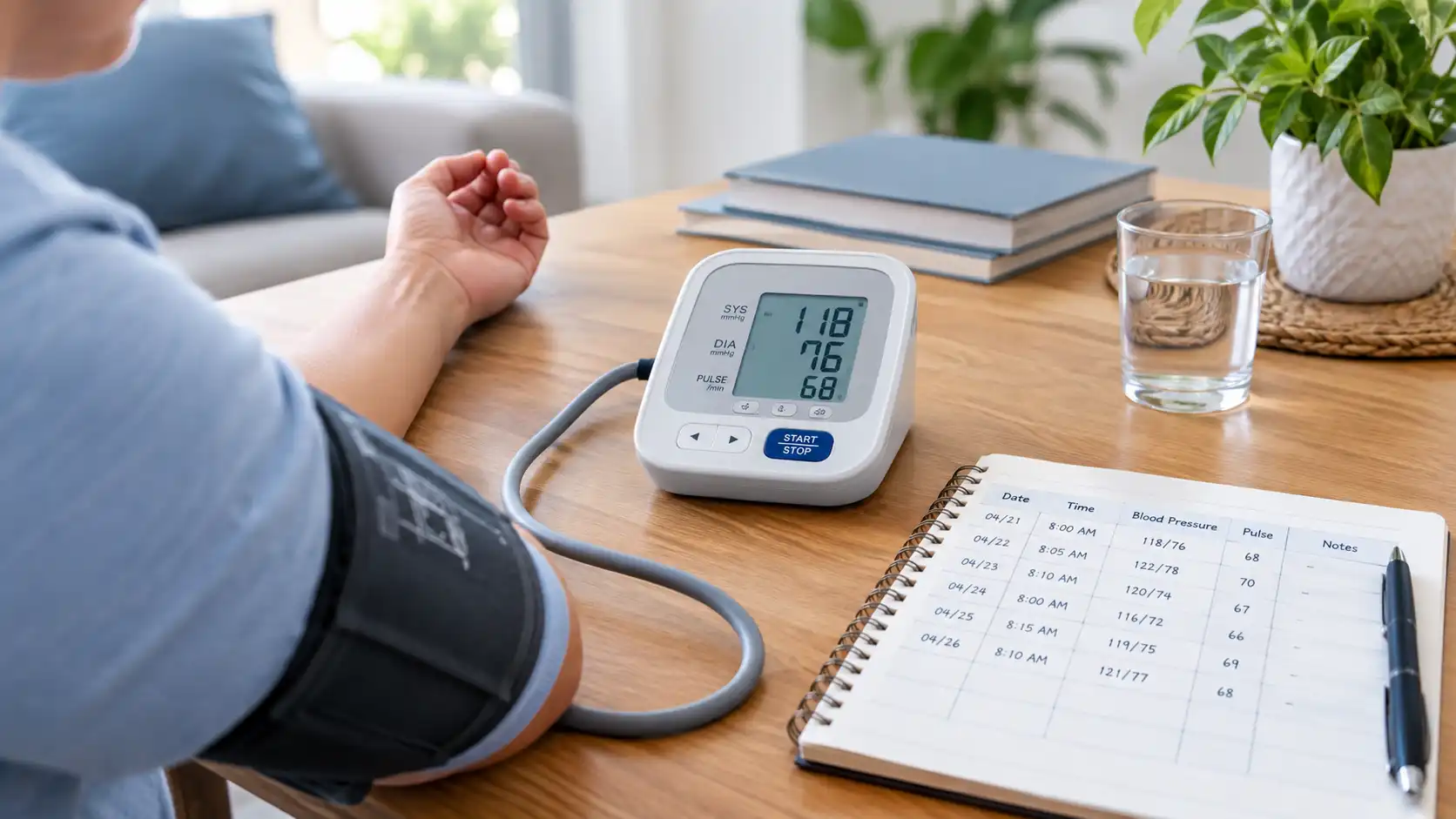

A single blood pressure reading in a clinic tells your nephrologist very little. You might have rushed in from the parking lot, skipped your morning pill, or felt nervous in the exam room. Two weeks of well-taken home readings tell a much clearer story.
For kidney patients, that story shapes real decisions: which medicine to adjust, whether a new drug is working, and how fast your kidneys may decline. High blood pressure is both a cause and a result of chronic kidney disease, so good numbers at home are one of the strongest tools you have.
Here is how to take readings that are accurate, and how to log them so your doctor can actually use them.
Why Home Readings Matter So Much for Kidney Patients
- White coat effect: Some people read 10 to 20 points higher in the clinic than at home.
- Masked hypertension: Others look normal in the clinic but run high at home. This is common in CKD and easy to miss.
- Night and morning patterns: Many CKD patients lose the normal overnight dip, and morning readings often run highest.
- Medication decisions: Home trends show whether a dose change worked, or went too far.
Our article on how high blood pressure damages your kidneys explains why every few points count.
Choosing the Right Home Monitor
| Feature | What to Choose | Why |
| Cuff type | Upper arm cuff | More accurate than wrist or finger devices |
| Validation | Listed on the U.S. Validated Device Listing (validatebp.org) | Tested for clinical accuracy |
| Cuff size | Matched to your arm circumference | A cuff too small reads falsely high |
| Memory | Stores 60 or more readings with date and time | Backs up your written log |
| Irregular heartbeat detection | Helpful but optional | May flag atrial fibrillation for follow-up |
Measure the middle of your upper arm with a soft tape before buying. Many people need a large adult cuff, which is often sold separately.
Dialysis patients: Never take a reading on the arm with your fistula or graft. Pressure from the cuff can damage the access.
The 7-Step Method for an Accurate Reading
- Prepare: No caffeine, smoking, or exercise for 30 minutes. Empty your bladder.
- Sit correctly: Back supported, feet flat on the floor, legs uncrossed.
- Rest: Sit quietly for 5 minutes. No phone, no TV, no talking.
- Position the arm: Rest it on a table at heart level, palm up.
- Place the cuff on bare skin: Bottom edge about one inch above the elbow bend. Never over a sleeve.
- Take two readings: Wait one minute between them.
- Record both right away: Write the time, both readings, and your pulse.
Common Mistakes and How Much They Change the Number
| Mistake | Effect on Systolic Reading |
| Full bladder | About 10 to 15 points higher |
| Unsupported back or feet | About 5 to 10 points higher |
| Crossed legs | About 2 to 8 points higher |
| Cuff over clothing | About 5 to 50 points off |
| Cuff too small | About 2 to 10 points higher |
| Talking during the reading | About 10 to 15 points higher |
Small errors add up. Two or three together can make normal blood pressure look like a crisis.
When and How Often to Measure
A reliable schedule for most kidney patients:
- Morning: Within an hour of waking, before breakfast and before blood pressure pills
- Evening: Before dinner or before bed
- Duration: 7 days in a row before each nephrology visit, and for 1 to 2 weeks after any medicine change
- Between visits: A few readings per week are usually enough once you are stable
If you feel dizzy when standing, also take a reading after standing for one minute. A big drop can mean your medicines need adjusting.
What a Useful Blood Pressure Log Looks Like
A random list of numbers on a sticky note is hard to use. A clear log helps your nephrologist make decisions in minutes. Copy this format into a notebook or spreadsheet:
| Date | Time | Reading 1 | Reading 2 | Pulse | Meds Taken? | Notes |
| Mon 6/2 | 7:10 AM | 142/84 | 138/82 | 72 | Before | Slept poorly |
| Mon 6/2 | 8:30 PM | 128/78 | 126/76 | 68 | After | |
| Tue 6/3 | 7:05 AM | 136/80 | 134/80 | 70 | Before | Salty dinner night before |

What to Put in the Notes Column
- Missed or late doses
- Headache, dizziness, or swelling
- Unusually salty meals or restaurant food
- Pain, stress, or poor sleep
- Illness, vomiting, or diarrhea
- Daily weight, if you have fluid problems
Bring the log and the monitor itself to your appointment. Our staff can check your device against the clinic reading. If you are seeing us for the first time, our first nephrology visit guide lists what else to bring.
Understanding Your Numbers
Targets vary by person, age, and other conditions. General reference points:
| Home Average | What It Usually Means |
| Below 120/80 | At or near goal for many CKD patients who tolerate it |
| 120 to 129 systolic | Close to goal, keep monitoring |
| 130/80 or higher | Above target for most CKD patients |
| Below 100 systolic with dizziness | Possibly too low, call your team |
| 180/120 or higher | Recheck after 5 minutes; if still high with chest pain, weakness, vision changes, or confusion, call 911 |
The KDIGO guideline suggests a systolic target below 120 for most adults with CKD when measured in a standardized way and when tolerated. Your nephrologist sets your personal goal. Learn more about managing blood pressure to protect kidney function.
Lifestyle Steps That Show Up in Your Log
Home monitoring also shows you, in real numbers, which habits help. Patients often see readings drop within two to four weeks after:
- Cutting sodium below 2,000 mg per day
- Walking 20 to 30 minutes most days
- Limiting alcohol
- Losing even 5 to 10 pounds
- Improving sleep and treating sleep apnea
See our lifestyle habits to slow chronic kidney disease and dietary choices for kidney health for practical changes. Some over-the-counter products, including decongestants and NSAIDs, raise blood pressure, so check our kidney medication safety guide first.
Sharing Readings Between Visits
Patients in rural parts of Carter, Love, Pontotoc, and Cooke counties often live far from the clinic. You do not need to drive in just to report numbers. Many monitors sync to phone apps, and readings can be reviewed during telehealth follow-ups. Read about the changing role of telehealth in kidney care.
Frequently Asked Questions
Which arm should I use?
Check both arms once. Use the arm with the higher reading from then on, unless it has a dialysis access.
Should I throw out high readings?
No. Record every reading. Patterns matter more than any single number.
Are wrist monitors okay?
Upper arm monitors are preferred. Wrist monitors are more sensitive to position errors.
How often should I replace my monitor?
Have it checked against a clinic reading once a year, and replace it if readings differ by more than about 10 points.
Bring Your Log, We Will Do the Rest
Our hypertension management program at Southern Oklahoma Kidney Center uses your home readings to fine-tune treatment for patients in Ardmore, Ada, and Gainesville. To review your log with a nephrologist, schedule an appointment or call (580) 223-8614.
This article is for education only and does not replace advice from your own physician.