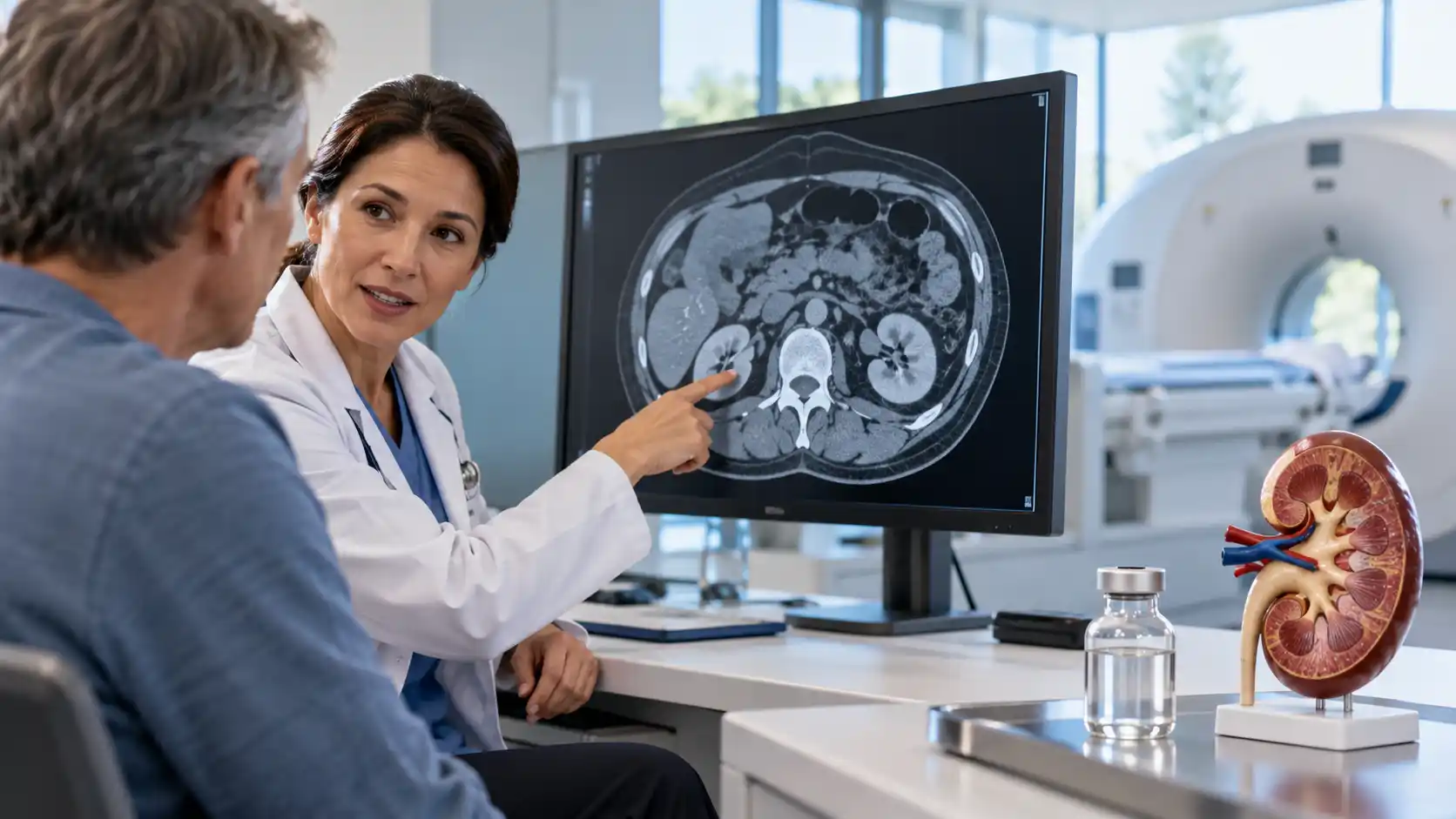

Your doctor orders a CT scan with contrast. Then someone mentions your kidneys, and suddenly the scan is on hold. Maybe it gets switched to a scan without contrast, one that shows less.
That hesitation made sense 20 years ago. Today, research tells a different story. For most people with chronic kidney disease, IV contrast for a CT scan is far safer than once believed. The real question is not “Is contrast dangerous?” It is “What is my eGFR, and what precautions fit my level of risk?”
What Is CT Contrast Dye?
CT contrast is an iodine-based liquid injected into a vein. It makes blood vessels, organs and tumors stand out on the images. The kidneys clear it from the body, usually within a day in people with normal function.
Modern agents are low-osmolar or iso-osmolar, which means they are much gentler on the kidneys than the older high-osmolar dyes that shaped early fears.
Contrast-Induced Nephropathy vs. Contrast-Associated AKI
These two terms sound alike but mean different things.
- Contrast-associated AKI (CA-AKI): any rise in creatinine within 48 hours after contrast, whatever the cause.
- Contrast-induced AKI (CI-AKI): kidney injury actually caused by the contrast.
Older studies counted every creatinine rise after a scan as contrast damage. But hospitalized patients often have infection, low blood pressure, dehydration or new medicines that hurt the kidneys on their own. Newer studies that compared similar patients with and without contrast found the true risk from IV contrast is low, and close to zero in people with eGFR of 45 or more.
Want to understand acute kidney injury more broadly? Read what causes acute kidney injury and how it is treated.
Your Risk Level by eGFR
A joint consensus from the American College of Radiology and the National Kidney Foundation set clear thresholds for IV contrast. This table summarizes them in plain language.
| eGFR (mL/min/1.73 m²) | Risk From IV Contrast | Usual Approach |
| 45 or higher | Very low, near background | No special preventive fluids needed |
| 30 to 44 | Low | Case by case; fluids for higher-risk patients such as those with diabetes or heart failure |
| Under 30 (not on dialysis) | Possible but uncertain | IV saline before and after the scan is recommended unless your heart cannot handle the fluid |
| Acute kidney injury | Higher, kidneys already stressed | Treat as high risk; use contrast only when the scan is needed |
| On dialysis with no urine output | No kidney function left to protect | Contrast can be given; no need to rush dialysis afterward |
| On dialysis with remaining urine output | Possible loss of residual function | Discuss with your nephrologist; protecting remaining function matters |
Your eGFR comes from a blood creatinine test. Our explainer on how creatinine levels indicate kidney function shows where that number comes from.
IV Contrast vs. Heart Catheter Contrast
Contrast given into an artery during a heart catheterization reaches the kidneys at full strength on its first pass. That route carries more risk than IV contrast for a CT scan. Cardiologists use separate precautions for those procedures.
What Actually Protects Your Kidneys During a Scan
IV Fluids
Normal saline through an IV before and after the scan is the only preventive step with consistent support. Your care team chooses the rate based on your weight, heart function and how urgent the scan is. Drinking extra water at home may help in lower-risk cases, but it does not replace IV fluids when eGFR is under 30.
What Does Not Help
Large trials found that sodium bicarbonate and N-acetylcysteine work no better than saline alone. Many hospitals have dropped them.
Smart Medication Steps
- Metformin: stop it at the time of contrast if your eGFR is under 30 or you have AKI. Restart after 48 hours if kidney function is stable on a repeat test.
- NSAIDs: avoid ibuprofen and naproxen for a few days around the scan.
- Diuretics and blood pressure pills: your doctor may hold them for a day if you are dry or your blood pressure runs low.
Many common drugs strain the kidneys. Our kidney medication safety tips list the main offenders.
Lower Dose and Spaced Scans
Radiologists can often reduce the contrast dose. When possible, avoid two contrast scans within 48 to 72 hours.
Follow-Up Labs
High-risk patients should get a creatinine test 48 to 72 hours after the scan. A small rise usually returns to baseline within a week. Our guide on a realistic recovery timeline after AKI explains what to expect if it does not.
The Bigger Risk: Skipping a Needed Scan
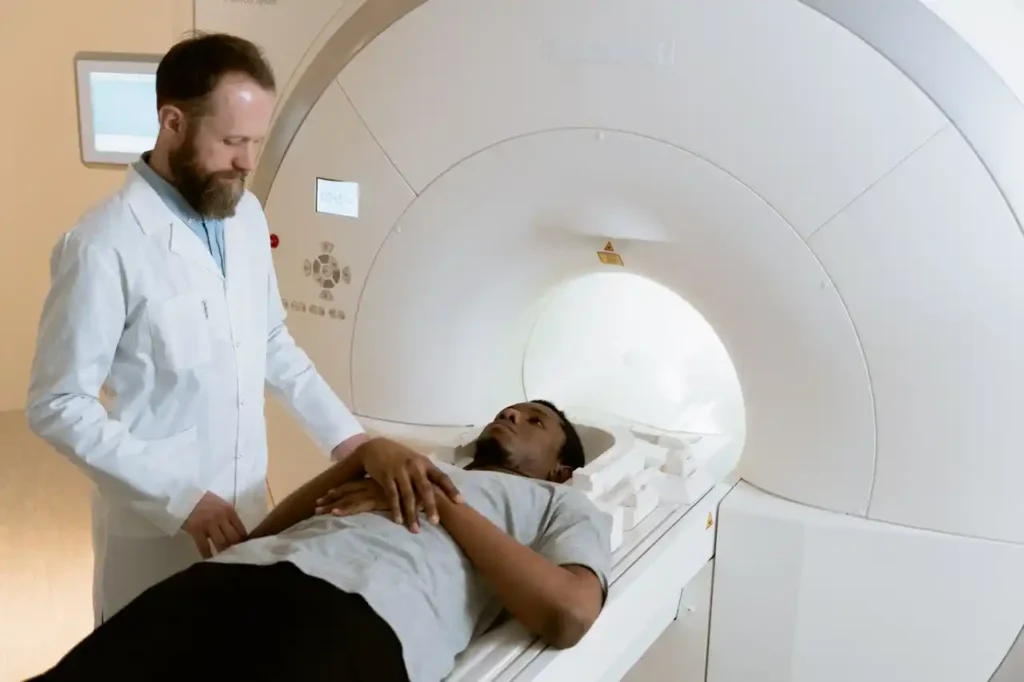
Here is the catch. Avoiding contrast has its own danger. A non-contrast CT can miss a bowel tear, a blood clot in the lungs, a stroke cause or a tumor. Delayed diagnosis can harm you far more than a small, often temporary rise in creatinine.
| Scenario | Benefit of Contrast | Kidney Risk | Usual Decision |
| Suspected stroke or lung clot in the ER | Life-saving diagnosis | Low to moderate | Give contrast without delay |
| Cancer staging or follow-up | Accurate staging guides treatment | Low with precautions | Give contrast with fluids if eGFR under 30 |
| Kidney stone check | Little added value | Low | Non-contrast CT is standard |
| Abdominal pain with eGFR under 30 | Often needed to find the cause | Possible | Fluids, lowest dose, follow-up labs |
Special Situations
Dialysis Patients
If you make little or no urine, contrast cannot harm kidney function that no longer exists. You do not need an extra dialysis session right after the scan unless you have fluid overload. If you still make urine, especially on peritoneal dialysis, tell the radiology team. That remaining function is worth protecting. Learn more about end-stage renal disease care and dialysis support.
Kidney Transplant Recipients
The same eGFR thresholds apply. Tell the imaging team you have a transplant, and let your transplant nephrologist know about the scan.
MRI With Gadolinium
MRI contrast is different from CT contrast. Older gadolinium agents were linked to a rare skin and organ condition in people with severe kidney disease. Newer agents carry very low risk, so most patients with low eGFR can have them when the MRI is needed.
The Shellfish Myth
A shellfish allergy does not raise your risk of a reaction to iodine contrast. A prior reaction to contrast itself is what matters.
Local Factors for Patients in Southern Oklahoma and North Texas
| Local Factor | Why It Matters | What to Do |
| Rural ERs may not have your recent labs | Staff may delay contrast while waiting for creatinine | Keep a recent eGFR on your phone or patient portal |
| Summer heat and dehydration | Dry patients face higher AKI risk | Hydrate well before outpatient scans in hot months |
| Long drives for follow-up labs | Missed 48-hour creatinine checks | Arrange follow-up labs at a nearby clinic in advance |
| Scans ordered by different specialists | Back-to-back contrast exposure | Ask your nephrologist to coordinate timing |
Questions to Ask Before Your Contrast Scan
- What is my most recent eGFR, and was it measured in the last 30 days?
- Will the scan give useful answers without contrast?
- Do I need IV fluids before and after?
- Should I pause metformin, NSAIDs or diuretics?
- When should I get a follow-up creatinine test?
Those questions fit any test, not just CT. Our article on which diagnostic tests in nephrology give the most accurate insights explains how kidney doctors choose tests.
Frequently Asked Questions
Can CT contrast cause permanent kidney damage?
It is uncommon. Most creatinine rises after contrast are small and temporary. Permanent loss is rare and usually occurs in people who already had severe kidney disease or other major illness.
Should I refuse contrast if I have stage 3 CKD?
Usually not. At eGFR 30 or above, IV contrast is low risk. Refusing a needed scan can lead to a missed diagnosis. Read more about managing stage 3 CKD.
How long does contrast stay in my body?
With normal kidneys, most of it clears within 24 hours. With low eGFR, it can take a few days. Dialysis removes it efficiently.
Who decides if I get contrast?
The ordering doctor and radiologist decide together, and your nephrologist can weigh in. If you have CKD, it helps to have your kidney doctor involved before elective scans.
Plan Your Scan With Your Kidney Team
If you have CKD and a contrast scan is coming up, a quick call to your nephrologist can make the plan safer and avoid needless delays. If your creatinine rose after a recent scan, we can help sort out the cause through our acute kidney injury management service, backed by long-term chronic kidney disease management.
Southern Oklahoma Kidney Center serves patients in Ardmore, Ada and our Gainesville, TX location. Call (580) 223-8614, send us a message through our contact page or schedule an appointment.
This article is for education only and does not replace advice from your own doctor or radiologist.