

Medically reviewed by Dr. Abdul Khan, Nephrology, Southern Oklahoma Kidney Center
Diabetes is the leading cause of kidney failure in the United States, and nearly one in three adults with diabetes will develop some degree of kidney damage. The relationship runs in both directions: high blood sugar damages the kidneys’ filtering vessels over time, and declining kidney function can, in turn, make blood sugar harder to manage. At Southern Oklahoma Kidney Center, we see patients across Ardmore, Ada, and Gainesville who are managing both conditions together. This guide explains how diabetes affects the kidneys, the tests that catch problems early, and the treatment strategies that protect kidney function for the long term.
How Diabetes Damages the Kidneys
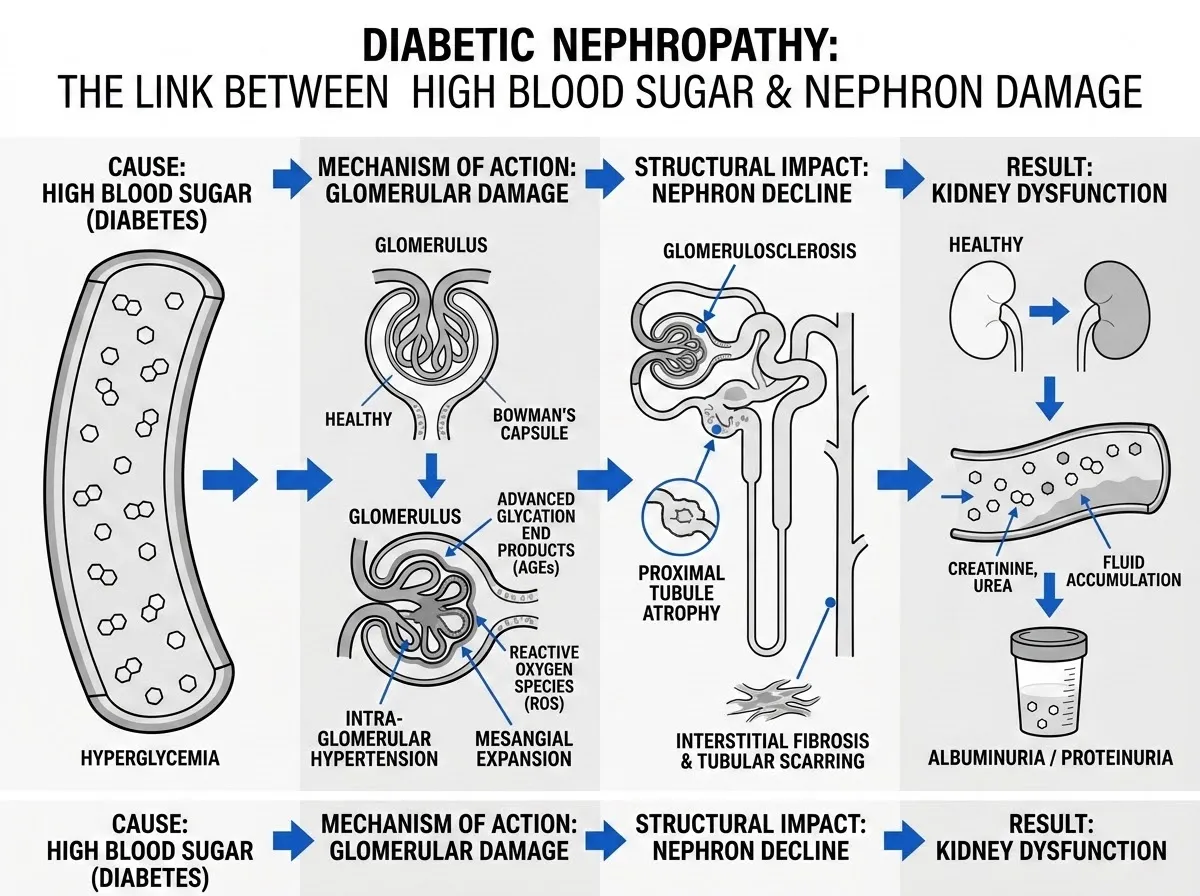
Persistently high blood sugar damages the small blood vessels inside the kidneys’ filtering units, called glomeruli. Over time, this damage causes the filters to leak protein into the urine and gradually lose their ability to remove waste from the blood. This condition, known as diabetic nephropathy or diabetic kidney disease, develops slowly, often over 10 to 15 years, which is why regular screening matters even before symptoms appear. Our diabetic kidney disease program is built specifically around catching and slowing this process early.
Stages of Diabetic Kidney Disease
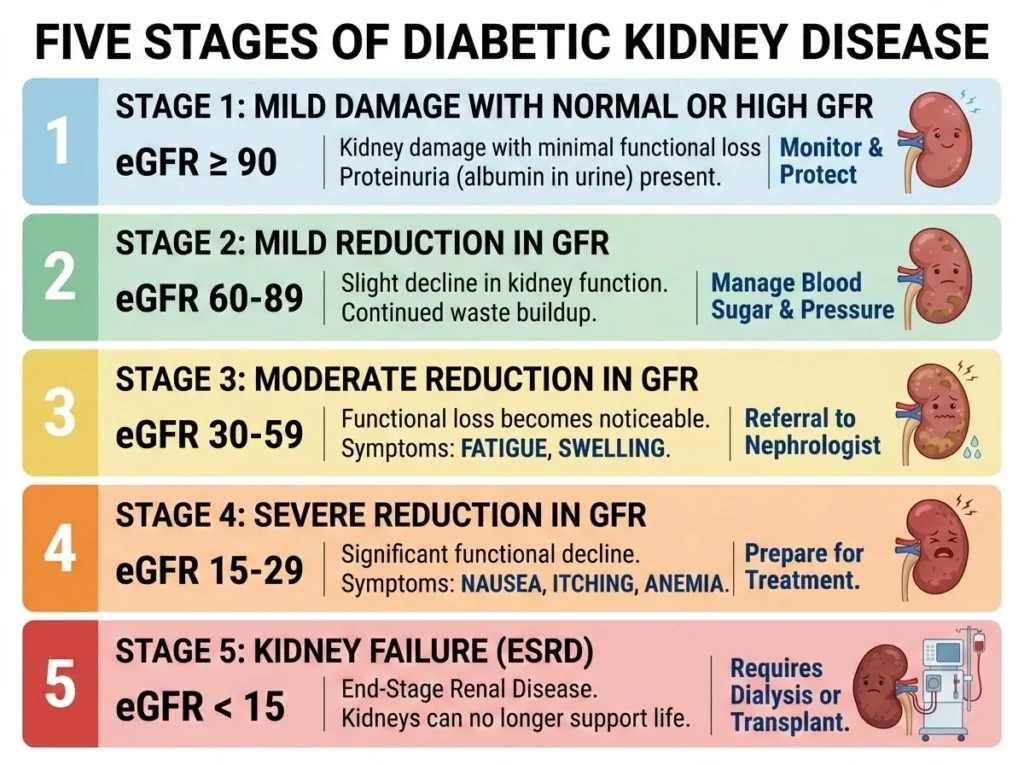
Diabetic kidney disease is generally tracked in stages based on eGFR and the amount of protein in the urine:
- Stage 1-2: Kidney damage with normal or mildly reduced function; often no symptoms
- Stage 3: Moderate reduction in kidney function; may begin to notice fatigue or swelling
- Stage 4: Severe reduction in function; symptoms become more noticeable and treatment planning intensifies
- Stage 5 (kidney failure): Dialysis or transplant is needed to sustain life
Catching the disease at stage 1 or 2 gives you and your care team the most options for slowing progression.
Warning Signs and Symptoms
Diabetic kidney disease often has no symptoms in its early stages, which is exactly why screening matters more than waiting for warning signs. As the disease progresses, watch for:
- Foamy or bubbly urine, a sign of protein loss
- Swelling in the legs, ankles, or around the eyes
- Increased fatigue
- Rising blood pressure that becomes harder to control
- Frequent urinary tract infections
If you notice any of these signs, contact your care team rather than waiting for your next scheduled appointment.
Screening Tests Every Diabetic Should Know
The American Diabetes Association and most nephrology guidelines recommend annual kidney screening for everyone with diabetes, consisting of:
- eGFR (estimated glomerular filtration rate): a blood test measuring how well the kidneys filter waste
- Urine albumin-to-creatinine ratio (ACR): a urine test that detects protein leakage, often the earliest sign of kidney damage
- Blood pressure check: since hypertension accelerates kidney damage in diabetics
- HbA1c: to confirm long-term blood sugar control
These tests are quick, inexpensive, and can detect kidney damage years before symptoms appear, giving you time to act.
| Test | What It Checks | How Often |
|---|---|---|
| eGFR (blood test) | How well kidneys filter waste | Annually (or more if abnormal) |
| Urine ACR (urine test) | Protein leakage, earliest warning sign | Annually |
| Blood Pressure | Hypertension that accelerates damage | Every visit / at home |
| HbA1c | Long-term blood sugar control | Every 3-6 months |
Treatment and Prevention Strategies
The good news is that diabetic kidney disease can often be slowed significantly with the right combination of strategies:
- Blood sugar control: keeping HbA1c within your individualized target range reduces ongoing damage to kidney blood vessels
- Blood pressure management: keeping blood pressure below your target, often 130/80 mmHg, protects kidney filtering units
- Medication choices: ACE inhibitors, ARBs, and newer SGLT2 inhibitors have been shown to protect kidney function in people with diabetes, beyond their effects on blood sugar or blood pressure alone
- Diet: reducing sodium and moderating protein intake eases the workload on the kidneys
- Routine monitoring: consistent eGFR and ACR testing tracks whether your current plan is working
Our team builds each patient’s plan around these pillars, adjusted to individual health needs.
The Blood Pressure Connection
Diabetes and high blood pressure frequently occur together, and each accelerates the other’s damage to the kidneys. If you are managing both conditions, our hypertension management program works alongside your diabetes care to reduce the combined strain on your kidneys. For a deeper look at blood pressure targets and monitoring, see our guide on managing blood pressure to protect kidney function.
When to See a Nephrologist
Ask your primary care provider for a referral to our nephrology team if you have diabetes and notice protein in your urine, a declining eGFR, rising blood pressure, or swelling. Early nephrology involvement gives you access to more treatment options and a better chance of slowing disease progression.
Due for your annual kidney screening? Schedule a consultation with our nephrology team in Ardmore, Ada, or Gainesville for eGFR and ACR testing, no separate referral required for an initial screening visit. Our nephrologists and diabetes-focused care coordinators work under one roof, so your blood sugar, blood pressure, and kidney function are always managed as one connected plan rather than three separate conversations.
Frequently Asked Questions
Can diabetic kidney disease be reversed?
Existing damage generally cannot be reversed, but progression can often be slowed significantly with blood sugar control, blood pressure management, and the right medications.
How often should diabetics get their kidneys checked?
At least once a year, with eGFR and urine albumin-to-creatinine ratio testing, or more often if you already have detected kidney damage.
What is a normal urine albumin-to-creatinine ratio?
A result under 30 mg/g is generally considered normal; higher levels suggest kidney damage and warrant further evaluation.
Does type 1 or type 2 diabetes carry a higher kidney disease risk?
Both types carry meaningful risk; type 2 diabetes is more common overall, but type 1 diabetics can also develop significant kidney damage, especially with long disease duration.
Can losing weight help protect my kidneys if I have diabetes?
Yes. Weight loss can improve blood sugar control and blood pressure, both of which reduce strain on the kidneys.
Managing diabetes and protecting your kidneys go hand in hand. Schedule a consultation with Southern Oklahoma Kidney Center in Ardmore, Ada, or Gainesville for a personalised screening and treatment plan.