


Medically reviewed by Dr. Abdul Khan, Nephrology, Southern Oklahoma Kidney Center
A diagnosis of end-stage renal disease (ESRD) changes daily life, but it does not have to take away your sense of control. ESRD means the kidneys are functioning at 10 to 15 percent of normal capacity or less, and dialysis or a transplant is needed to sustain life. At Southern Oklahoma Kidney Center, we walk alongside patients in Ardmore, Ada, and Gainesville from the moment of diagnosis through every stage of treatment. This guide explains what to expect physically, practically, and emotionally, so you can move forward with clarity instead of uncertainty.
What Is End-Stage Renal Disease?
ESRD is the final stage of chronic kidney disease (CKD), typically defined as an estimated glomerular filtration rate (eGFR) below 15. At this stage, the kidneys can no longer remove enough waste and fluid from the blood on their own, so treatment through dialysis or transplant becomes necessary to sustain life. Our End-Stage Renal Disease care team specializes in guiding patients through this transition with a coordinated plan built around your specific health needs. According to the CDC, roughly 800,000 Americans are living with kidney failure, and the majority are being treated with dialysis. Reaching ESRD does not happen overnight; it is usually the endpoint of years of gradual decline through the earlier stages of CKD, which is why regular monitoring in the years leading up to this stage matters so much.
Symptoms You May Notice as ESRD Progresses
As kidney function declines, waste and fluid accumulate in the body, causing symptoms such as:
- Persistent fatigue and weakness
- Swelling in the legs, ankles, or around the eyes
- Nausea, vomiting, or loss of appetite
- Muscle cramps and restless legs, especially at night
- Itchy skin and changes in skin color
- Shortness of breath and difficulty concentrating (sometimes called “brain fog”)
- Decreased urine output
These symptoms vary from person to person, and your care team will monitor your labs closely to determine the right time to begin treatment.
Your Treatment Options at This Stage
There is no single right answer for every patient; the best option depends on your health, lifestyle, and personal preferences. Options we support include:
- In-center hemodialysis, performed at a dialysis facility several times per week
- Home hemodialysis, which allows more frequent, flexible treatment at home
- Home peritoneal dialysis, a gentler daily therapy often done overnight
- Kidney transplant care, for eligible patients, including pre- and post-transplant support
- Conservative (non-dialysis) management, focused on symptom control and quality of life, for patients who choose not to pursue dialysis
Our nephrologists will walk through the benefits and trade-offs of each option based on your health profile, home situation, and goals.
| Treatment Option | Where It Happens | Typical Schedule |
|---|---|---|
| In-Center Hemodialysis | Dialysis facility | 3-4 hours, ~3x/week |
| Home Hemodialysis | Home | Flexible, more frequent sessions |
| Home Peritoneal Dialysis | Home | Daily, often overnight |
| Kidney Transplant | Hospital (surgery), then routine follow-up | One-time surgery, lifelong monitoring |
| Conservative Management | Home, with clinic visits | Ongoing symptom-focused care, no dialysis |
What the First Few Weeks of Treatment Look Like
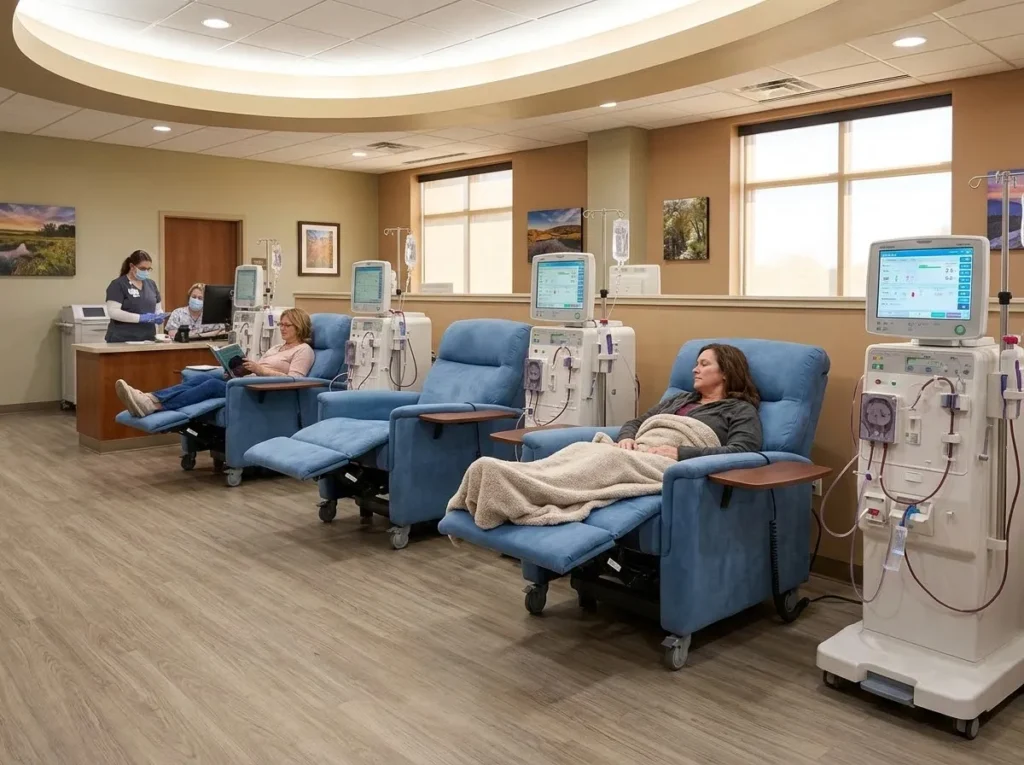
The early weeks after starting dialysis are often the biggest adjustment. If you choose in-center hemodialysis, you can expect sessions lasting three to four hours, typically three times a week, with a care team monitoring your blood pressure and comfort throughout. If you choose a home therapy, you will go through a training period, often two to four weeks, where a nurse teaches you and a care partner how to safely perform treatment. Fatigue, appetite changes, and adjusting to a new schedule are common in the first month, and most patients find that energy levels improve once their body adapts and waste levels stabilize.
Daily Life Adjustments: Diet, Fluids, and Energy
Most patients need to adjust their diet to manage potassium, phosphorus, and sodium levels, and many will also need to track fluid intake to avoid swelling and strain on the heart. A renal dietitian can help build a meal plan that still feels satisfying rather than restrictive. Energy levels often fluctuate around treatment days, so many patients find it helpful to schedule demanding tasks, work, or travel around their dialysis calendar. Light exercise, as approved by your care team, and consistent sleep routines also make a meaningful difference in day-to-day energy.
Emotional Health and Caregiver Support
It is common to feel grief, frustration, or anxiety after an ESRD diagnosis, even while accepting treatment. These feelings do not mean anything has gone wrong; they are a normal response to a major life change. Many centers, including ours, offer access to a renal social worker who can help you process the emotional side of diagnosis, connect with local support groups, and coordinate practical support for family caregivers. Caregivers benefit from this support too, since supporting a loved one through dialysis or transplant preparation is demanding in its own right.
Financial and Insurance Considerations
Most people with ESRD qualify for Medicare, regardless of age, once they meet certain work-history and treatment requirements, though the timing of coverage depends on the treatment option chosen. Our billing and social work staff can help you understand what Medicare, Medicaid, or private insurance will cover, including dialysis, medications, and transportation assistance, so financial questions do not stand between you and starting treatment on time.
Thinking beyond the first few months of treatment? Our guide to planning long-term care for kidney failure patients covers advance care planning, building a support team, and Medicare in more depth. If you or a loved one is adjusting to a new diagnosis, schedule a consultation with our nephrology team and social work staff in Ardmore, Ada, or Gainesville — you do not have to figure this out alone. Our renal social workers help patients navigate Medicare, Medicaid, and transportation support every day, so you have a real person to call with billing questions.
Frequently Asked Questions
How long can someone live with end-stage renal disease?
Life expectancy varies widely depending on age, overall health, and treatment choice; many patients on dialysis or with a transplant live for many years, and your nephrologist can give you a more personalised outlook.
Is dialysis painful?
Dialysis itself is generally not painful, though needle placement for hemodialysis may cause brief discomfort, and some patients experience temporary side effects like cramping or fatigue after sessions.
Can I still work while on dialysis?
Many patients continue working, especially with schedule adjustments or home-based dialysis options that offer more flexibility.
What is the difference between hemodialysis and peritoneal dialysis?
Hemodialysis filters blood outside the body through a machine, while peritoneal dialysis uses the lining of the abdomen to filter blood internally, often at home.
Will I need dialysis forever?
Some patients remain on dialysis long-term, while others transition to a kidney transplant when eligible and a suitable donor is available.
You do not have to navigate ESRD alone. Schedule a consultation with our nephrology team in Ardmore, Ada, or Gainesville, and let us help you build a treatment and support plan that fits your life.