
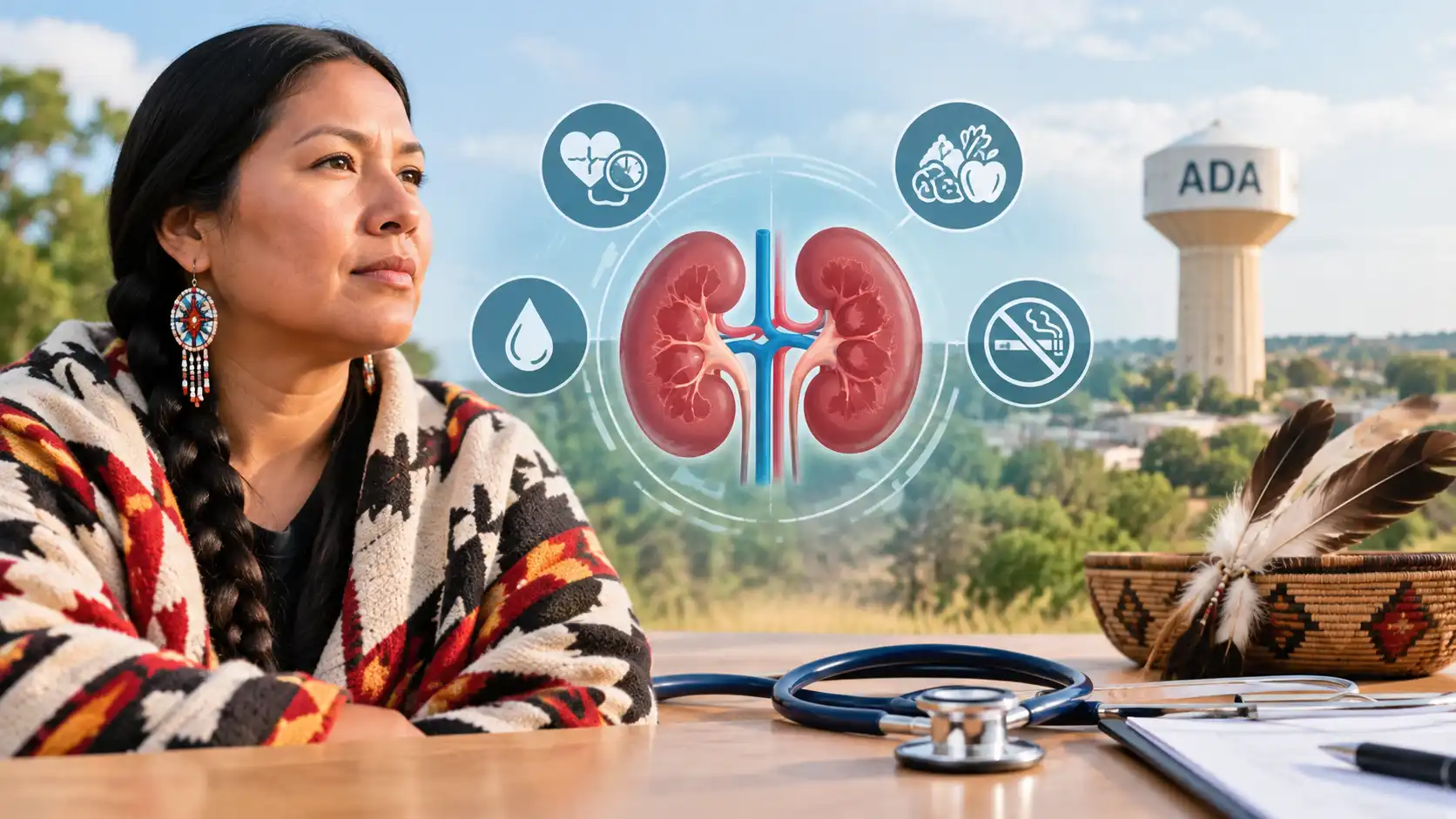

Ada sits at the heart of Chickasaw country, and Pontotoc County is home to thousands of Native American families. It is also home to our Ada office at 530 N Monte Vista. Every week we see the same pattern: kidney disease found late, in people who had diabetes or high blood pressure for years before anyone checked their kidneys.
The numbers explain why this matters. According to federal minority health data, American Indian and Alaska Native (AI/AN) people were 33 percent more likely to be diagnosed with kidney failure than the overall U.S. population in 2022, and 24 percent more likely to die from kidney disease.
There is also good news, and it is big. Between 1996 and 2013, the rate of diabetes-related kidney failure among Native American adults dropped by 54 percent, the fastest decline of any group in the country. That drop came from screening, team-based diabetes care, and community programs. It proves kidney failure is preventable here.
Why Kidney Disease Risk Is Higher in Native Communities
Diabetes
American Indian and Alaska Native adults have the highest rate of diagnosed type 2 diabetes of any racial group in the United States, roughly double the rate of non-Hispanic white adults. Diabetes is the leading cause of kidney failure. Type 2 diabetes also tends to start younger in Native communities, which means more years of exposure before middle age. Our article on the link between diabetes and kidney disease explains how high blood sugar damages the kidney filters.
High Blood Pressure
High blood pressure is the second leading cause of kidney failure and often travels with diabetes. Each one makes the other worse. See how high blood pressure damages your kidneys for the full mechanism.
Late Screening
This one surprises people. Federal data from 2023 show AI/AN Medicare patients with diabetes were 47 percent less likely to get an annual urine albumin test than Medicare patients with diabetes nationwide. That test catches kidney damage years before symptoms.
Rural Distance and Access
Families in Allen, Stonewall, Roff, Fitzhugh, and rural Pontotoc County can live 20 to 45 minutes from specialty care. Missed follow-ups add up. So do long waits for referrals.
Food Environment
Traditional Chickasaw and Choctaw foods such as corn, beans, squash, wild onions, and lean game are kidney friendly. The modern food supply is not. Convenience store meals, canned foods, and frybread made with processed flour and heavy salt raise sodium, sugar, and weight.
Risk Factor Matrix for Ada Area Families
| Risk Factor | How It Harms Kidneys | What Lowers the Risk |
| Type 2 diabetes | High glucose scars the filters | A1C near 7 percent for most adults, SGLT2 inhibitors, yearly kidney labs |
| High blood pressure | Pressure damages small vessels | Home monitoring, ACE inhibitor or ARB, lower sodium |
| Obesity | Extra workload, drives diabetes | Modest weight loss, GLP-1 medicines when appropriate |
| Family history of kidney failure | Shared genetic and environmental risk | Earlier and more frequent screening |
| Smoking | Narrows blood vessels, speeds decline | Quit support through tribal and state programs |
| Regular NSAID use | Reduces kidney blood flow | Use acetaminophen instead when your doctor agrees |
Early Warning Signs People Tend to Miss
Early kidney disease rarely hurts. When signs appear, they are easy to blame on something else:
- Swollen ankles at the end of the day
- Foamy or bubbly urine
- Getting up at night to urinate more than usual
- Tiredness that sleep does not fix
- Itchy, dry skin
Our list of 5 early warning signs of kidney disease goes deeper on each one.
Prevention That Works: What Cut Kidney Failure by Half
The national decline in diabetes-related kidney failure among Native Americans did not come from one miracle drug. It came from simple steps done consistently:
- Yearly kidney labs for everyone with diabetes: Both eGFR (blood) and UACR (urine).
- Blood pressure control: Often with an ACE inhibitor or ARB when albumin shows up in urine.
- Blood sugar control: Tracking A1C and using newer medicines that also protect kidneys.
- Team care: Doctors, nurses, dietitians, pharmacists, and community health workers working as one team.
- Community education: Programs that reach people where they live.
Families can build the same system at home. Our guide on how to prevent kidney damage when you have diabetes turns this into a checklist.
Screening Schedule by Age and Risk
| Person | What to Check | How Often |
| Adult with type 2 diabetes | eGFR, UACR, blood pressure, A1C | At least yearly |
| Adult with high blood pressure | eGFR, UACR | At least yearly |
| Adult with a parent or sibling on dialysis | eGFR, UACR, blood pressure | Ask your doctor, often yearly |
| Youth with type 2 diabetes | UACR, blood pressure | At diagnosis, then yearly |
| Pregnant woman with diabetes | Kidney labs, blood pressure | Early in pregnancy and as directed |
Routine testing is the single most useful step here. Read why routine kidney screenings matter for more.
Food Choices That Honor Tradition and Protect Kidneys
Kidney-friendly eating does not mean giving up your culture. In many ways, it means returning to it.
- Build meals around corn, beans, and squash, the Three Sisters
- Choose lean meats such as venison, turkey, or fish, grilled or roasted instead of fried
- Make frybread an occasional food and pair it with vegetables instead of heavy toppings
- Season with wild onion, herbs, and pepper instead of salt
- Replace sweet tea and soda with water or unsweetened tea
If you already have CKD, some foods high in potassium or phosphorus may need limits. Our list of kidney-friendly foods helps you plan.
Making Care Easier to Reach
Distance should not decide your kidney health. Our Ada clinic lets patients in Pontotoc, Seminole, Johnston, and Murray counties see a nephrologist without driving to Oklahoma City. We work alongside primary care doctors and tribal health clinics so lab results and care plans are shared, not duplicated. For follow-ups that do not need an exam, telehealth visits can save a trip.
Our broader kidney disease care and prevention program focuses on catching disease early, when simple steps work best.
Frequently Asked Questions
Why are Native Americans more likely to develop kidney disease?
Mainly because of higher rates of type 2 diabetes and high blood pressure, combined with later screening and harder access to specialty care in rural areas.
Can kidney disease be prevented if it runs in my family?
Often, yes. Early screening, blood pressure and blood sugar control, and kidney-protective medicines greatly lower the chance of kidney failure.
Do I need a referral to see a nephrologist in Ada?
Some insurance plans require one. Call our office and we will tell you what your plan needs.
What tests should I ask for?
Ask for both an eGFR blood test and a UACR urine test every year if you have diabetes or high blood pressure.
Protect Your Kidneys Close to Home
Southern Oklahoma Kidney Center serves Ada and the surrounding communities from our Monte Vista office, with additional clinics in Ardmore and Gainesville. Learn more about who we are, then contact our Ada team or call (580) 223-8614 to book a kidney screening consultation.
This article is for education only and does not replace advice from your own physician.