
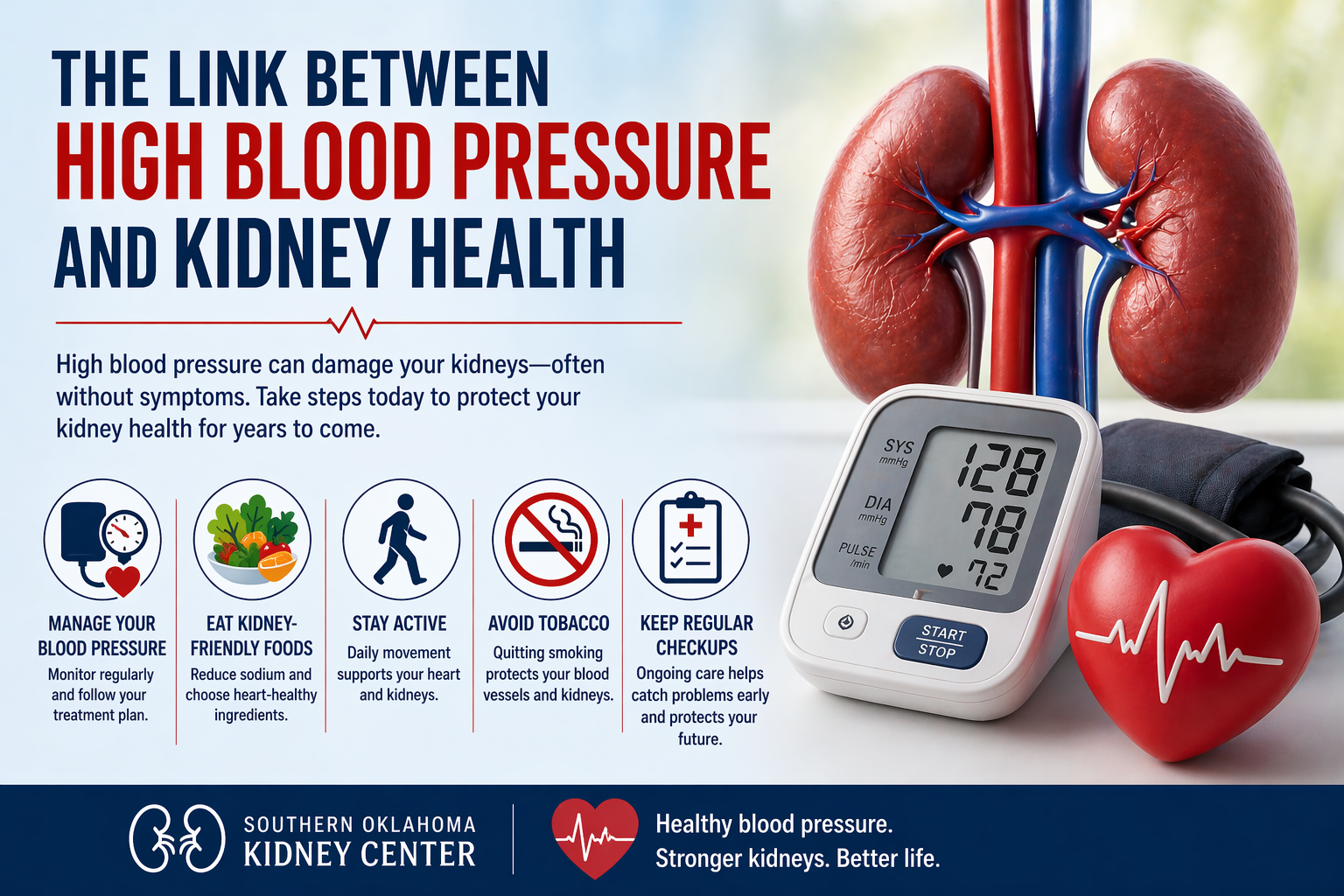

At Southern Oklahoma Kidney Center, we often see how closely heart and kidney health are connected. Understanding how high blood pressure affects your body is essential for long-term wellness. Over time, high blood pressure can damage the delicate filters in your kidneys, often without noticeable symptoms. It remains one of the leading causes of kidney failure.
Managing High Blood Pressure to Protect Your Renal Function
Protecting your kidneys begins with managing high blood pressure consistently. Elevated blood pressure can strain and damage blood vessel walls over time, making it more difficult for the kidneys to filter waste effectively. This process often develops silently, with many people unaware until it has progressed.
Monitoring your blood pressure at home can provide valuable insights. Your readings may vary based on factors such as stress or diet. Sharing this information with your doctor helps guide a more effective treatment plan. Early action can help prevent more serious complications over time.
We care for many patients across Southern Oklahoma who manage high blood pressure and its effects. Receiving care close to home can make it easier to stay consistent with checkups. Ongoing monitoring and a dedicated care team play an important role in reducing long-term risks.
How Chronic Pressure Damages the Kidney Filters
Your kidneys contain tiny filtering units called nephrons. These structures are responsible for cleaning your blood. When high blood pressure is present, the blood vessels within the kidneys can become thickened and narrowed, reducing blood flow and impairing kidney function.
Over time, the kidneys may lose their ability to effectively remove excess fluid and waste. This can lead to fluid buildup, which may further increase blood pressure. This cycle can worsen without proper management. Symptoms such as leg swelling or increased fatigue may begin to appear.
A simple urine test can detect the presence of protein, which may indicate kidney damage. Protein in the urine suggests that the kidneys’ filtering system is not functioning properly. Early detection allows for timely intervention and better long-term outcomes.

Dietary Choices for Lowering Your Blood Pressure
Your diet plays an important role in managing blood pressure. Reducing sodium intake can help lower blood pressure levels naturally. Excess sodium causes the body to retain fluid, increasing blood volume and placing additional strain on the heart and blood vessels.
Incorporating fresh fruits and leafy green vegetables into your diet can be beneficial. These foods are often rich in potassium, which helps balance sodium levels. However, patients with kidney disease should consult their doctor, as potassium intake may need to be adjusted based on individual needs.
Eating lean proteins like fish or beans is also a good move. Avoiding processed meats and canned soups can make a huge impact quickly. You might find that your taste buds adjust after a few weeks. It takes time to build new habits. But your kidneys will certainly thank you for the effort.
Lifestyle Changes for Better Cardiovascular Health
Regular physical activity supports healthy blood pressure levels. You don’t need an intensive fitness routine; simple activities like brisk walking can improve circulation and support cardiovascular health. Aim to stay active each day.
Quitting smoking is an important step in protecting both your heart and kidney health. Tobacco use damages blood vessels and can accelerate kidney disease progression. While quitting can be challenging, your care team can provide support and resources to help you succeed.
Managing stress is also important for maintaining healthy blood pressure. Stress can cause temporary increases in blood pressure levels. Incorporating relaxation techniques, such as deep breathing or engaging in hobbies, can support overall well-being.
Consistent Medical Monitoring and Follow-Up Care
Regular checkups and lab tests are essential for monitoring kidney health. Many people may not experience symptoms while damage is developing. Ongoing evaluation allows your care team to adjust your treatment plan as needed and support better long-term outcomes.
At Southern Oklahoma Kidney Center, we prioritize your overall well-being. We work closely with you to manage high blood pressure and protect your long-term health. Our team is committed to providing personalized support so you can stay active, informed, and confident in your care.