
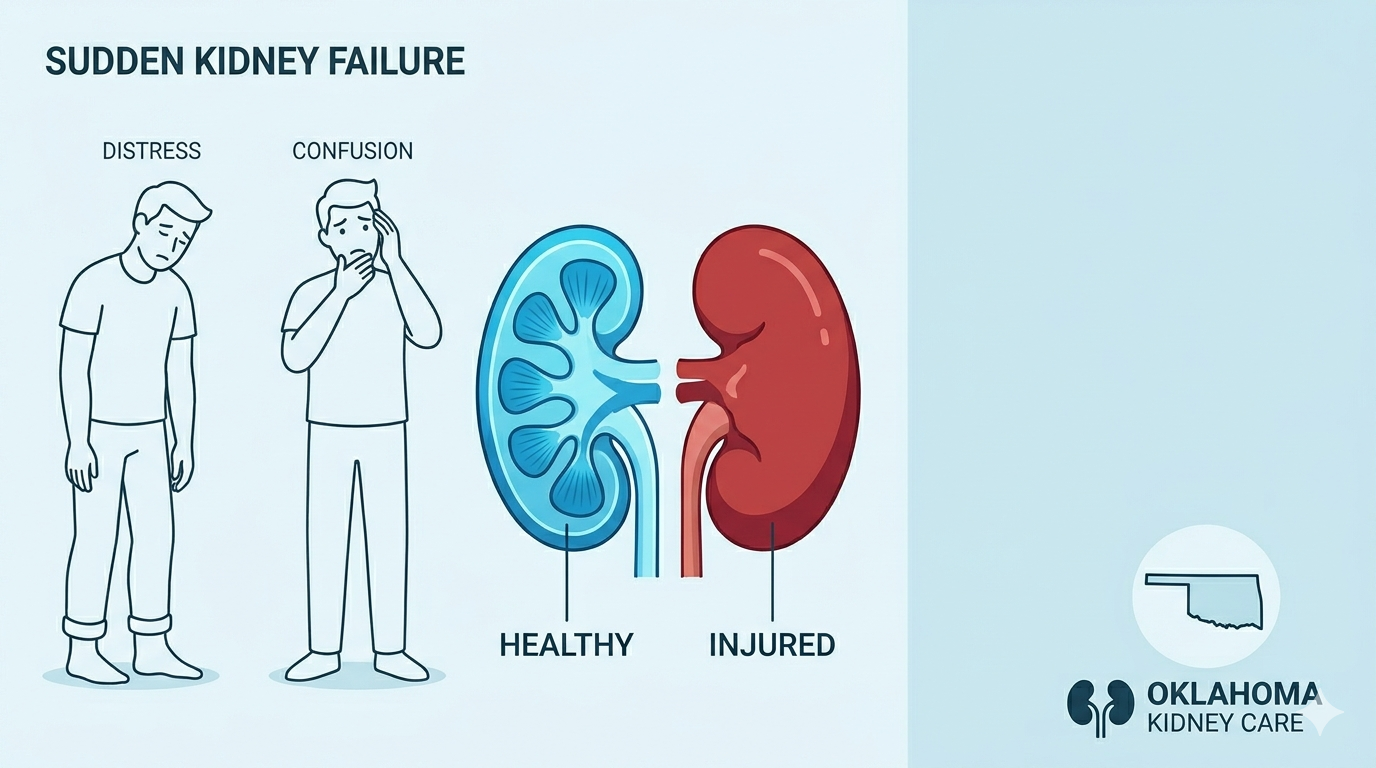

Your kidneys are your body’s natural filters. They work hard to keep your blood clean and your fluids in balance. But sometimes, these organs can suddenly stop functioning properly. This happens fast—often in mere hours. We call this sudden kidney failure. It is a serious medical emergency. Getting medical care quickly is important to protect your health and kidney function.
What is Sudden Kidney Failure?
Sudden kidney failure is when your kidneys lose their ability to filter waste. Waste products can begin building up in the bloodstream very quickly. Unlike chronic kidney disease, this condition develops suddenly over a short period of time. This condition can affect multiple systems in the body if not treated promptly. Many people are diagnosed while receiving hospital care for another medical condition.
It can hit anyone. People already dealing with kidney health issues are at higher risk. Heart problems also make it more likely to happen. Early diagnosis and treatment can improve the chances of kidney function recovery. You have to pay attention to your body.
Common Causes of Kidney Injury
A significant decrease in blood flow to the kidneys is one of the most common causes. Dehydration or losing a lot of blood can trigger sudden kidney failure. Certain medications can directly affect kidney tissue and function. Severe infections can also interfere with normal kidney function.
Blockages in your system also cause real trouble. Kidney stones or an enlarged prostate stop the flow of urine. Waste can build up in the urinary tract, creating pressure within the kidneys. This pressure damages the delicate filters that make up your renal function.

Signs You Should Not Ignore
Pay attention to how many times you are going to the bathroom. A significant decrease in urine output can be a warning sign of sudden kidney failure. Swelling in your ankles or feet is another common sign. You may experience fatigue, weakness, or shortness of breath.
Confusion or nausea can occur when waste products build up in the bloodstream. These symptoms are easy to ignore or blame on something else. These symptoms should not be ignored, especially if they appear suddenly. Contact a kidney specialist promptly if you notice concerning symptoms.
Managing Your Kidney Health
Treatment usually begins by identifying and addressing the underlying cause of the kidney injury. Doctors focus on restoring kidney health by treating the root cause of the condition. You might need to follow a strict diet or drink extra fluids for a while.
Check in with your medical team often. Monitoring your blood pressure can help reduce the risk of future kidney complications. Taking a proactive approach to your care can support long-term kidney health.
Expert Care In Oklahoma
The team at Southern Oklahoma Kidney Center understands how overwhelming kidney-related health concerns can feel. We provide professional guidance and care focused on your kidney health needs.