
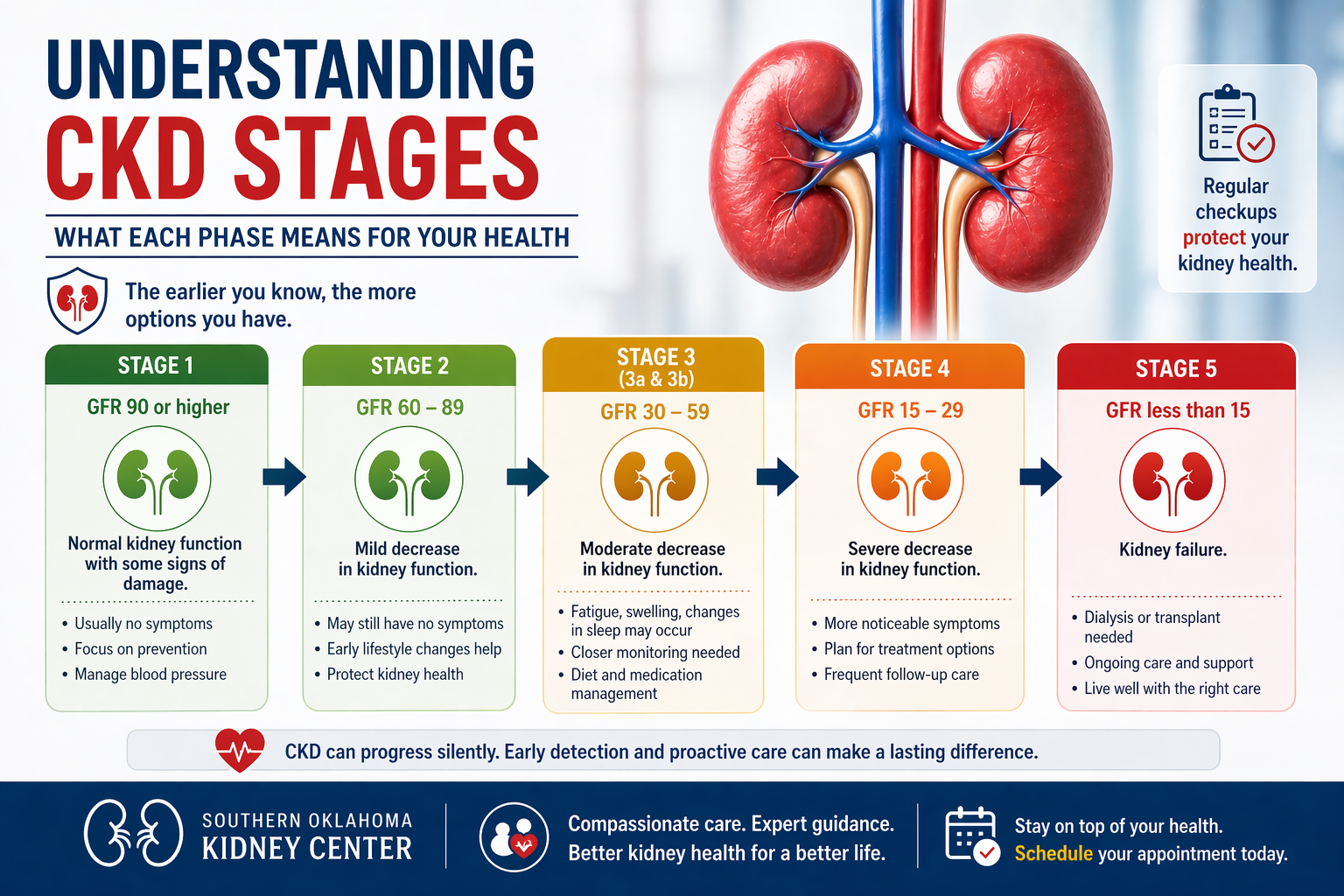

At Southern Oklahoma Kidney Center, we believe informed patients make better health decisions. Understanding CKD stages is essential for managing your condition effectively. Each stage reflects how well your kidneys filter waste from your blood, helping guide a treatment plan tailored to your needs.
A Clear Guide to Understanding CKD Stages
Understanding CKD stages begins with a simple test called the glomerular filtration rate (GFR). This measurement indicates your level of kidney function. In stages 1 and 2, kidney damage is mild, and symptoms may not be noticeable, although early changes are already present.
In Stage 1, GFR is 90 or higher, indicating normal function with some evidence of kidney damage. In Stage 2, GFR ranges from 60 to 89, reflecting a mild decline in function. Managing blood pressure during these stages is especially important to help slow disease progression.
Many patients have questions about these early stages. This is an important time to make lifestyle changes that can help preserve kidney function. Healthy eating, regular physical activity, and ongoing medical guidance all play a key role in slowing progression.
Moving into the Middle Stages of Kidney Disease
Stage 3 is divided into Stage 3a and 3b, and is often when CKD is formally diagnosed. GFR ranges from 30 to 59 during this stage. Some individuals may begin to experience symptoms such as fatigue, changes in sleep patterns, or mild discomfort.
During these stages, waste can begin to accumulate in the bloodstream, potentially leading to complications such as anemia or bone disorders. Dietary adjustments, including managing certain minerals, become increasingly important. More frequent monitoring and follow-up care are typically recommended.
Understanding these changes allows you to take a more active role in your care. In addition to lab results, it’s important to pay attention to physical symptoms such as swelling in the hands or feet. Reporting these changes to your care team supports timely adjustments to your treatment plan.

What to Expect in the Advanced Stages of CKD
Stage 4 indicates advanced kidney damage, with GFR ranging from 15 to 29. At this stage, symptoms such as nausea or a metallic taste may become more noticeable. Planning for future treatment options becomes an important part of care.
During this stage, your care team will discuss potential treatment options, including dialysis or kidney transplantation. While this information can feel overwhelming, early planning allows for more informed decisions and better preparation.
Stage 5, also known as kidney failure, occurs when GFR falls below 15. At this point, the kidneys are no longer able to function adequately, and treatment such as dialysis or transplantation is required. With proper care and support, many individuals continue to lead active and fulfilling lives.
Staying Proactive with Your Renal Health Care
Attending regular appointments is essential for effective disease management. Changes in lab results may require adjustments to your treatment plan. Ongoing monitoring helps prevent complications and supports better long-term outcomes.
At Southern Oklahoma Kidney Center, we support you through every stage of your care. Understanding CKD stages may feel overwhelming, but our team is committed to providing clear guidance and compassionate support. We work closely with you to ensure you receive the highest quality care.