
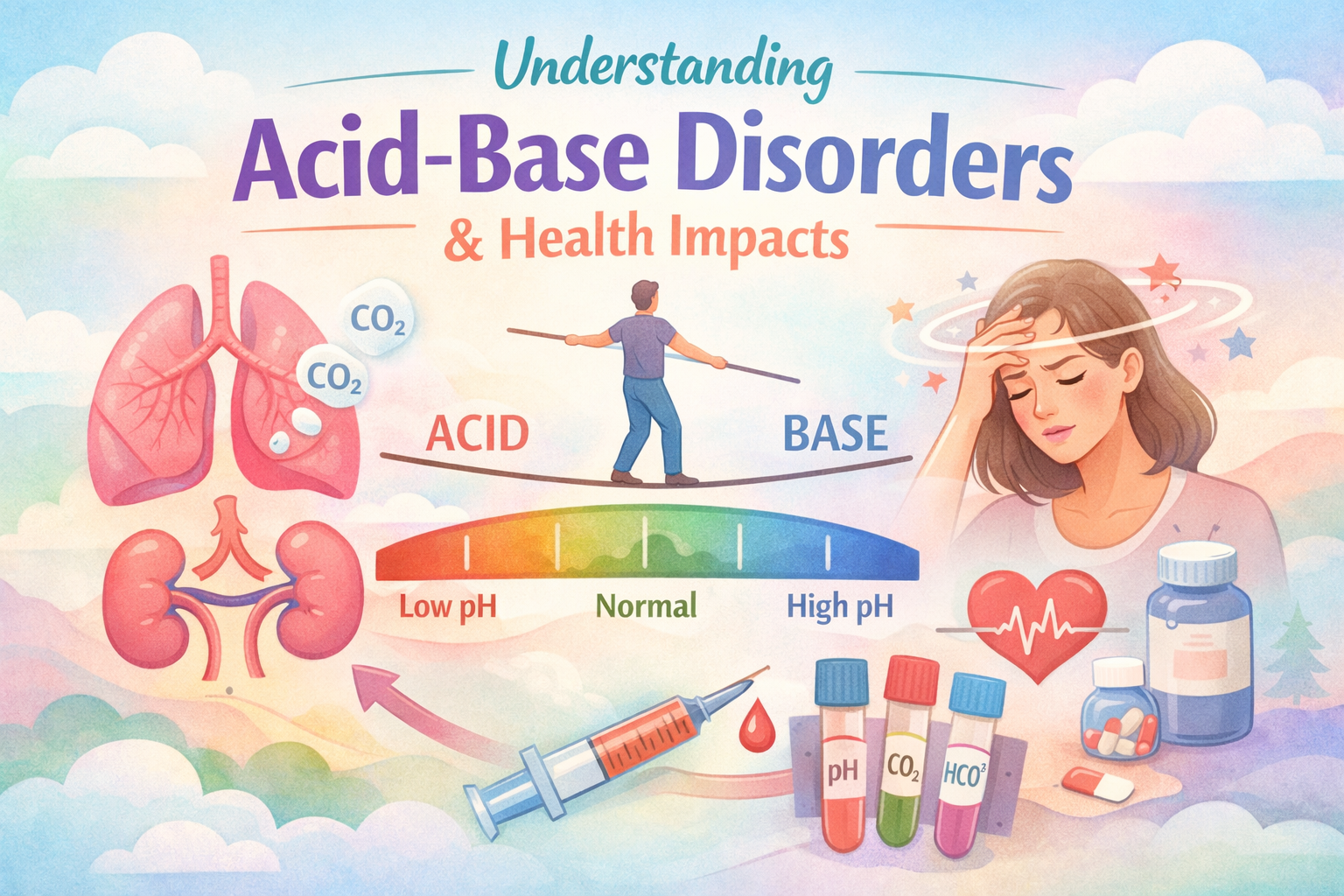

Have you ever suddenly felt dizzy, or maybe just totally exhausted for absolutely no clear reason? Or noticed your breathing seems a little off? If that happens, your body could actually be sending you subtle warning signs of an acid-base disorder.
These problems pop up when the super delicate balance of acids and bases in your blood gets messed up. Even tiny shifts can send ripples through everything: your organs, your muscles, your nerves. Here at SouthernOKC, we see folks dealing with this, and we’re all about catching these issues early. Because prevention really does matter.
What Acid-Base Balance Means
Picture your blood as a tightrope walker. On one side are the acids, the hydrogen ions (H⁺). On the other hand is the base bicarbonate (HCO₃⁻). If that walker is perfectly balanced, life is smooth.
But if you tilt just slightly toward acid (acidosis) or base (alkalosis), suddenly your body has to struggle just to keep going. Even the smallest changes can trigger an acid-base disorder. Your lungs and kidneys are working tirelessly, nonstop, trying to keep this perfect balance, often without you ever noticing. But if you ignore the minor signals, that trouble just quietly creeps in.
The Body’s Amazing, Complex pH System
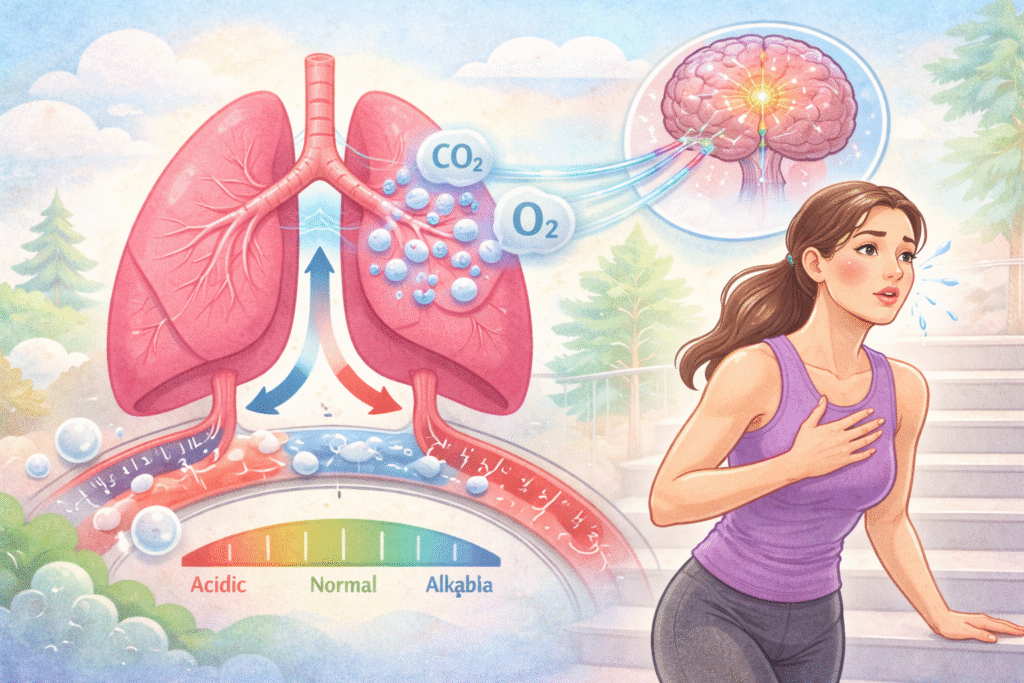
Your body is smarter than you think. Seriously. The lungs are constantly blowing off carbon dioxide (CO₂) with every exhale. The kidneys? They are the slow, patient adjusters, slowly fine-tuning your bicarbonate levels. And your brain is monitoring all of it!
Even something as simple as mild dehydration or a quick flu may temporarily tip the balance. You might not feel it immediately; you just feel sickish, but this is often when an acid-base disorder quietly starts its work.
The Bicarbonate Buffer System: Your Shock Absorber
Think of the bicarbonate buffer system as your body’s best shock absorber. It’s always there, ready to neutralize incoming acids to stabilize your blood pH. Carbonic acid (H₂CO₃) interacts with bicarbonate to keep things in check.
While the famous Henderson-Hasselbalch equation sounds incredibly complicated, your body handles it automatically. But over time, ignoring subtle shifts allows those acid-base disorders to develop silently.
Lungs and pH: It’s More Than Just Breathing
Your lungs are pH guardians. Through that process called alveolar gas exchange, CO₂ is removed super efficiently. Respiratory chemoreceptors in your body tell your brain to adjust your breathing rate instantly. Ever notice yourself breathing faster after climbing a couple of flights of stairs? That’s your body responding, balancing the CO₂. So, rapid breathing or shortness of breath can sometimes be a massive hint or a sign of early acid-base disorders brewing.
Kidney Function and pH Regulation: The Slow Fix
The renal tubules, part of the kidney, are basically recycling machines. They reabsorb bicarbonate and kick out hydrogen ions. Enzymes like carbonic anhydrase speed this up. When the kidneys slow down, though, or if they’re damaged, subtle pH changes happen. You won’t notice them until the acid-base disorders become obvious. Specialists in nephrology can step in to manage those kidney-related issues way before they get totally out of hand.
Common Causes: Why It Goes Wrong
A bunch of things can throw your balance off. Lung disease is a big one; it stops you from removing CO₂ efficiently. Kidney disease slows down that bicarbonate reabsorption. But it can also be metabolic issues, dehydration (way more common than you think), or certain medications.
Noticing these early helps us prevent complications. Simple lifestyle adjustments, along with guidance, really do support Chronic Kidney Disease prevention, significantly lowering those long-term risks.
The Four Types Simplified
There are four main types, and knowing which one helps the doctor treat it fast:
- Respiratory Acidosis: Usually from shallow or slow breathing (CO₂ buildup).
- Respiratory Alkalosis: Too much CO₂ blown off (hyperventilation).
- Metabolic Acidosis: Kidneys can’t excrete acid, or too much is produced.
- Metabolic Alkalosis: Often from prolonged, severe vomiting.
Knowing the exact type lets us act early and prevents ongoing acid-base disorders.
Symptoms and When to Come See Us
Watch out for persistent fatigue, that weird dizziness, confusion, shortness of breath, or breathing that feels too rapid. These symptoms often appear sporadically. Which makes them really easy to dismiss.
Timely evaluation here at SouthernOKC protects your organs, especially your heart, and prevents acid-base disorders from getting worse. It might feel unsettling, but early care changes the whole prognosis.
Diagnosis: How We Check
Doctors often use an arterial blood gas (ABG) test. This measures pH, pCO₂, and bicarbonate; it immediately tells us if the issue is respiratory or metabolic. Detecting imbalances early allows us to provide immediate, effective treatment. It’s a vital test.
Treatment and How SouthernOKC Steps In
Treatment totally depends on how bad things are. Mild imbalances might just need hydration, maybe some simple oxygen therapy, or electrolyte correction. More serious cases? Those can require IV fluids or urgent care intervention.
SouthernOKC gives you personalized care, monitoring, and specific treatment plans. Acting early prevents recurring acid-base disorders and keeps our patients healthier.
Acid-base disorders are absolutely manageable when they are addressed quickly. Southern Oklahoma Kidney Center supports patients, offering the monitoring and guidance that maintains your health and prevents scary complications. Come talk to us.