
Keeping track of kidney function tests, those renal panels your doctor keeps ordering? Honestly, it does feel confusing at first. However, these tests are actually a simple and early way for you to understand how well those two workhorse organs are functioning. They catch potential issues early, which is the whole point.
Here at SouthernOKC Primary & Urgent Care, we serve patients throughout Southern Oklahoma and North Texas. We make sure you get the results, you understand them, and, crucially, that you know the next steps. You know what to do about it. The strange, comforting thing is this: once you grasp the basics of these kidney function tests, the whole process loses its intimidation factor entirely. It really does.
Why Taking Care of Your Kidneys Is Absolutely Vital
Our kidneys are handling way, way more than filtering water, and most people don’t even realize it. They are the body’s quiet, hyper-efficient sanitation and balance system. They filter waste, obviously, but they also meticulously balance fluids, regulate electrolyte levels, and even help manage your blood pressure. And get this: they produce erythropoietin, which helps your body make red blood cells, plus they activate Vitamin D. Wild, right?
When those little filtering units, the glomeruli inside the kidneys, slow down, the entire, incredibly complex system is thrown off balance. The early warning signs? They’re often subtle, annoyingly subtle. Maybe you feel a bit more tired than usual. The strange, comforting thing is this: just general fatigue, the kind you blame on a bad night’s sleep. SouthernOKC tells everyone, honestly: healthy kidneys are quiet and effective. Trouble only starts showing up when their efficiency drops significantly.
When Should You Need a Kidney Function Test?
Look, certain conditions almost guarantee a need for monitoring. If you’re dealing with diabetes or hypertension, you simply must be monitored closely. But other symptoms are more direct calls to action. Have you noticed blood in your urine? Are you dealing with noticeable, persistent swelling? How about fatigue that just won’t quit, paired with a weird lack of appetite? Those are immediate indications that your kidney function needs a serious look.
We also recommend evaluation if you’re having specific urinary issues, like dysuria (painful urination), oliguria (not enough pee), or visible protein in your urine. Getting the early read and the early detection from the kidney function test allows providers to truly prevent future complications and protect your long-term health.
Your provider might casually suggest testing if you’re deemed at risk for Chronic Kidney Disease.
The Tools We Use: Blood and Urine
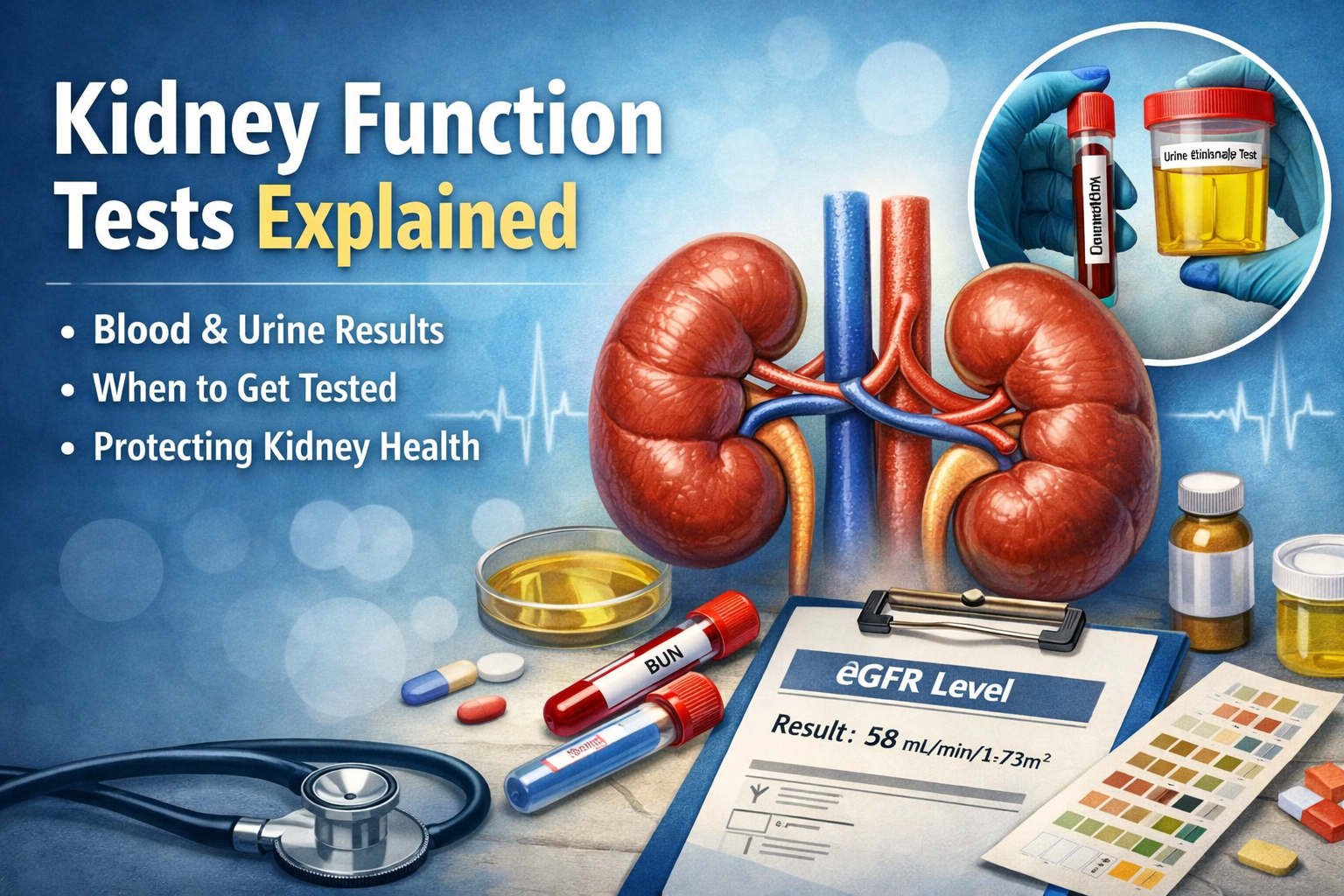
We use both blood and urine tests. They work together. SouthernOKC uses these tools to see how well your kidneys are filtering out the garbage, balancing those key minerals, and just maintaining general function. The results then guide everything: treatment adjustments, medication changes, and follow-up schedules. When you combine them, those kidney function tests provide this really complete, high-definition picture of your renal health.
Blood Tests
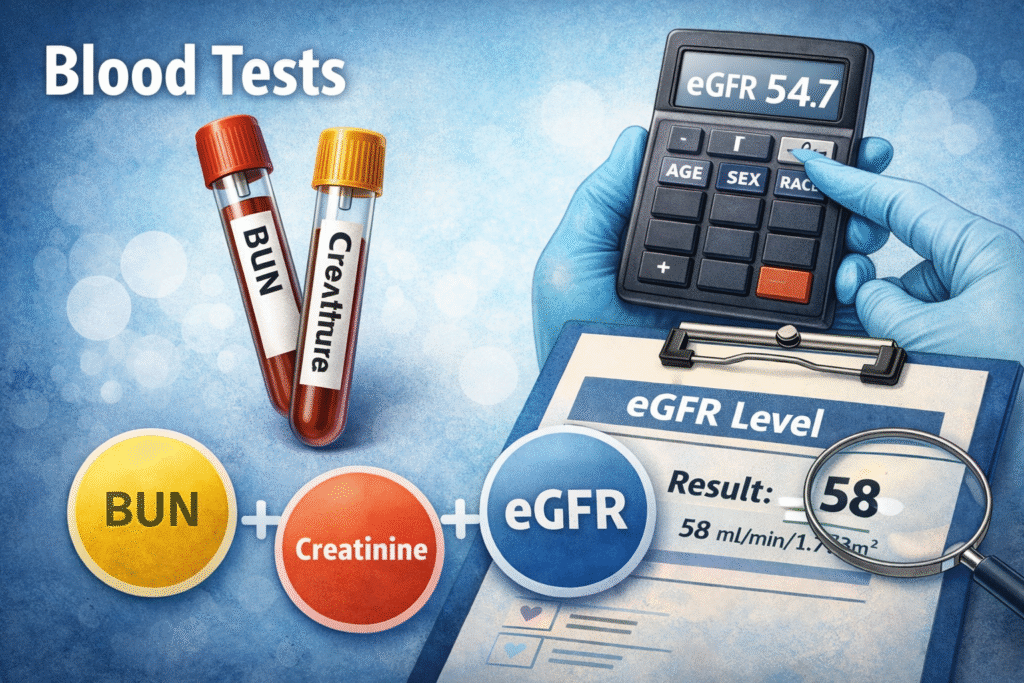
Blood work checks the basic housekeeping. We look at Blood Urea Nitrogen (BUN) and Creatinine—they show us how well the kidneys are actually pulling the waste out. But the big number, the one everyone focuses on, is the estimated Glomerular Filtration Rate (eGFR). This is the calculated measure of kidney function, age, sex, and race (race is increasingly removed depending on the lab).
It’s a complex formula, we know. But together, those three numbers—BUN, Creatinine, eGFR—give us a super clear picture of kidney health. Sometimes the results are obvious; other times, we need a cautious look at the data. That’s where we step in. Regular kidney function testing just helps us track subtle shifts.
Urine Tests
Urine tests fill in the details that the blood work missed. The urinalysis checks for a bunch of things: pH, gravity, any little crystals, and, most importantly, protein levels. We specifically look at the urine albumin-creatinine ratio (uACR). This test is key because it can find tiny amounts of albumin protein that can actually signal damage.
Casts? If we find those in your urine, it might point to other underlying conditions. And for the long term, detailed monitoring? You might have to do a 24-hour urine test. Yes, it’s a pain, a genuine hassle, but those kidney function tests provide truly essential information for your ongoing care.
Preparing for Your Kidney Test (A Few Tips)
Preparation is surprisingly dependent on the exact test. Some blood tests will absolutely require fasting. Staying really well-hydrated makes the blood draws easier. And listen, avoid putting heavy lotions on your arms, which can make finding a good vein harder.
And for women? You might need to consider where you are in your menstrual cycle, as results can slightly shift. And for anyone dealing with needle anxiety, it’s totally common, by the way, just let the staff know beforehand. A quick heads-up can make the entire process so much smoother.
Understanding Your Results
Your results will always come with reference ranges. That eGFR number? Higher values mean your kidneys are working more strongly and efficiently. The uACR identifies early stress even when you feel totally fine. SouthernOKC helps you interpret those raw numbers, explaining what is actually normal for you versus when we need to take action. Understanding these kidney function tests is the single best way to finally take control of your health. Honestly, it empowers you.
Decoding Your Kidney Numbers: When to See a Specialist
Seeing abnormal kidney results can be scary. What does high creatinine really mean? It suggests your kidneys are having trouble clearing waste. If your eGFR is low, it signals reduced filtering power. Finding protein (like microalbumin) in your urine is a crucial red flag for damage. These signs often point toward CKD progressing. If you see these results, it’s a clear signal: you need a nephrologist’s expert opinion to manage your kidney health effectively.
Next Steps, Monitoring, and Help
If your kidney function is declining, we need to confirm that with follow-up testing. Sometimes, it’s as simple as needing medication adjustments, especially for blood pressure meds.
Listen, this is urgent: seek immediate medical attention if you experience sudden, rapid swelling, unexplained shortness of breath, or sudden muscle cramps. Do not delay. These symptoms could be red flags for urgent kidney concerns.
We also might point you toward specific kidney disease care prevention resources for early-stage lifestyle interventions. SouthernOKC guides you through every single step, making complicated care feel approachable and understandable.